

 Belgique (français)
 Canada (english)
 Deutschland
 España
 France
 Ireland
 Italia
 Luxembourg (français)
 Nederland
 Portugal
 Schweiz (deutsch)
 United Kingdom
 Österreich


THE EUROPEAN TYRE LABEL
The energy labelling of tyres has existed since 2012, giving European consumers information about energy efficiency, performance on wet road surfaces, and sound impact. Using this common notation, the purpose of the European label is to help consumers with their purchase of new tyres. It also gives more detailed information on line, allowing consumers and professionals to make an informed decision.
A new tyre labelling system came into force on 1 May 2021.
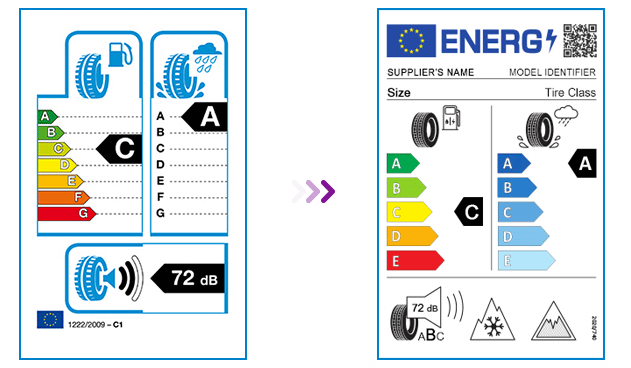
(1222/2009)
(2020/740)
What has changed since 1 May 2021?
The labelling of tyres and the efficiency classes applied in the European Union were modified following the application of a new scale.
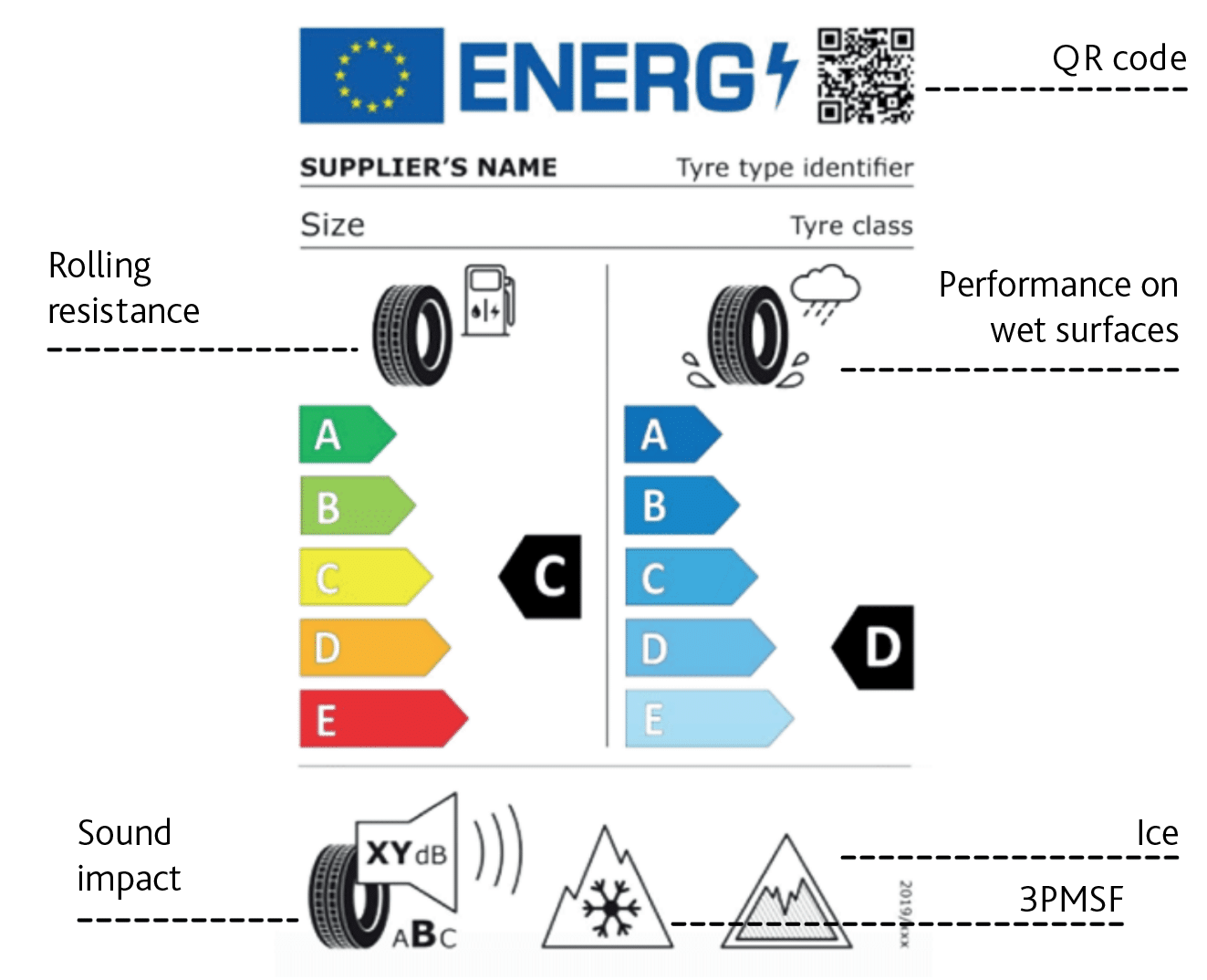
New information is provided to consumers, such as manufacturer name, tyre reference, size, loading and speed index, and class: cars (C1), vans (C2), and truck or bus (C3). The new label contains additional information on tyre performance in snowy and icy weather conditions.
Focus on the changes
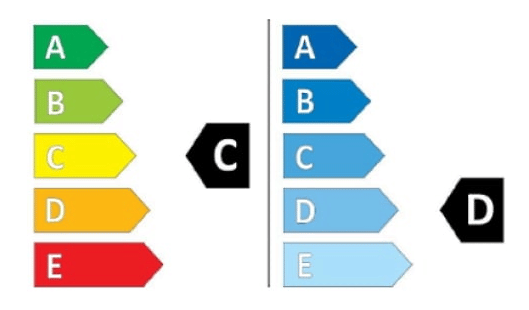
The change of classes
The scale for the labels that classify performance on wet surfaces and rolling resistance now has five classes instead of seven, designated by the letters A to E. The purpose of this new notation is to simplify the labelling, but tyre performance remains exactly the same.
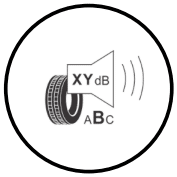
External noise
The tyre classification considers the external noise generated by a tyre during driving. By choosing a tyre with a good noise rating, you can reduce the impact of your driving on your surroundings. The waves (1, 2, or 3) have been replaced by a letter grade (A, B, or C). The exact number is indicated at the bottom of the label.
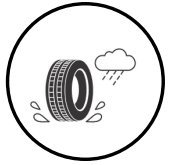
Performance on wet surfaces
This is the tyre's road holding capability on a wet road. The performance grades go from A to E.
Rolling resistance
According to the rolling resistance of the tyre, its energy efficiency goes from Class A (the best fuel economy) to Class E (the worst fuel economy). From one class to the next, fuel consumption increases by approximately 0.1 litre per 100 km distance.

QR code
Placed in the upper right-hand corner of the label, it provides easy access to product details in the public section of the EU database.
Tyre type identifier
Every tyre must now be identified by a unique designation.

The snow tyre pictogram
The snow tyre pictogram (3PMSF) indicates whether a tyre is suitable for heavy snow conditions. General snow traction performance is tested according to Appendix 7 of UNECE regulation No. 117.

The ice pictogram
This pictogram indicates the fact that a tyre offers a shorter braking distance on ice-covered roads in winter. Information concerning performance on ice is based on the ISO 19447 standard.
To which tyres does this apply?
Since 2012, this law applies to:
- Class 1 tyres: Car tyres.
- Class 2 tyres: Tyres for light commercial vehicles.
- Class 3 tyres: Tyres for heavy commercial vehicles.
Tyres places on the market before 1 May 2021 must keep the old label. Those placed on the market after 1 May 2021 must have the new label in the following cases:
- If produced after 1 May 2021 (DOT 1821 and after).
- If manufactured before 1 May 2021, they benefit from a grace period until 30 November 2021.
- If placed on the market after 1 December 2021, whatever their date of manufacture.
And the 2012 label?
As from 1 November 2012, new European tyre labelling comes into effect. It is compulsory for all new tyres manufactured from 1 July 2012.
Actual fuel savings and road safety are heavily dependent on driver behaviour and, in particular, the following three factors:
- ecological driving can appreciably reduce fuel consumption,
- tire inflation pressure should be checked regularly to achieve the best grip on a wet road and fuel efficiency,
- safety distances should always be scrupulously respected.
A. What does it involve?
It provides the consumer with clear information on fuel consumption, safety characteristics on a wet road and the noise that the tyre produces.

B. How do I read this information?
1. Fuel saving and CO² emissions:
This indicates the level of rolling resistance. The rating scale varies between A (the most economical) to G (the least economical).
The fuel saving generated each year by the best tire compared to the worst is approximately 90 litres. Over the entire lifetime of a tyre, the fuel saving amounts to around five full tanks (i.e. 240 litres with average fuel consumption of 7 litres/100 km and estimated annual mileage of 15,000 km for a tire lifespan of 40,000 km).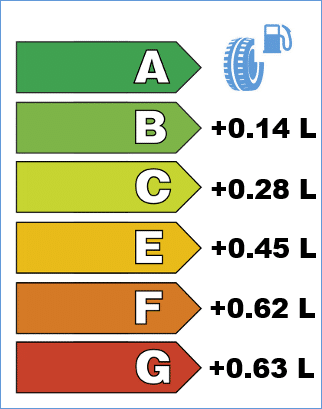
 Base value for rating.
2. Adhesion to a wet road surface:
This indicates the braking performance on a wet road. The rating scale varies between A (shortest braking distance) to G (longest braking distance).
This criterion is calculated on the ability of the tyre to stop a vehicle at 80 kph.
The difference between each level corresponds to two car-lengths (i.e. approx. 3 to 6 metres). Braking distances increase considerably for tyres with a high rating.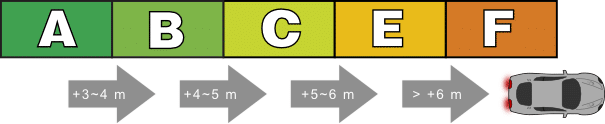
 Not measured: from 1/11/2014, F and G rated tyres will no longer be sold in the EU.
3. External road noise:
This is the noise outside the vehicle caused by its movement. This rating is expressed by two values.
- Waves: one to three full bars.
- The sound level corresponding to these waves.
Today, the European standard is three full bars, the basis on which the calculation is made. From 2016, the standard will be two full bars (i.e. approximately 3 decibels (dB) below what it is today).
The expected benefits of this rating system:
- A continued increase in the technical manufacturing level of tyres in the interest of continually improving product quality.
- Guiding the consumer in his/her choice of which tyre to buy.
IMPORTANT:
The EUROPEAN LABEL does not cover all the determining elements and criteria for the efficiency of a product. Some, such as the braking distance on a dry surface, the resistance to aquaplaning, interior noise and road holding on a bend are not mentioned in the new labelling.
These items are therefore additional tyre ratings for Pneus Online customers that you can find in the product data sheet for the tyre in question.
C. Exceptions:
The following are exceptions to the rating system:
- Motor cycle tyres
- Quad bike tyres
- Re-treads
- Professional off-road tyres.
- Tyres designed only for fitting on vehicles first registered prior to 1 October 1990.
- T-type spare tyres intended for temporary use.
- Tyres in the less-than-80 kph speed category
- Tyres with a maximum nominal rim diameter of 254 mm (10 inches) or of at least 635 mm (25 inches)
- Tyres fitted with devices to improve traction (for example studded tyres).
- Tyres designed only for fitting to vehicles intended exclusively for racing.
For more information go to http://eur-lex.europa.eu/legal-content/EN/TXT/?uri=CELEX:32009R1222