Motorbike load and speed indexes
Load index
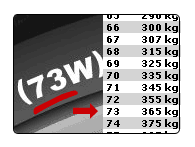
The load index is a numerical code that corresponds to the maximum weight a tire can support. A tire's load multiplied by 2 must cover the gross single axle load of your vehicle. To determine your load index, locate the number on the sidewall of one of your tires and compare it with the load index table.
|
Load index |
Weight
in kg |
|
20 |
80 |
|
22 |
85 |
|
24 |
85 |
|
26 |
90 |
|
28 |
100 |
|
30 |
106 |
|
31 |
109 |
|
33 |
115 |
|
35 |
121 |
|
37 |
128 |
|
40 |
136 |
|
41 |
145 |
|
42 |
150 |
|
44 |
160 |
|
46 |
170 |
|
47 |
175 |
|
48 |
180 |
|
50 |
190 |
|
51 |
195 |
|
52 |
200 |
|
53 |
206 |
|
54 |
212 |
|
Load index |
Weight
in kg |
|
55 |
218 |
|
58 |
236 |
|
59 |
243 |
|
60 |
250 |
|
61 |
257 |
|
62 |
265 |
|
63 |
272 |
|
64 |
280 |
|
65 |
290 |
|
66 |
300 |
|
67 |
307 |
|
68 |
315 |
|
69 |
325 |
|
70 |
335 |
|
71 |
345 |
|
72 |
355 |
|
73 |
365 |
|
74 |
375 |
|
75 |
387 |
|
76 |
400 |
|
77 |
412 |
|
78 |
425 |
|
Load index |
Weight
in kg |
|
79 |
437 |
|
80 |
450 |
|
81 |
462 |
|
82 |
475 |
|
83 |
487 |
|
84 |
500 |
|
85 |
515 |
|
86 |
530 |
|
87 |
545 |
|
88 |
560 |
|
89 |
580 |
|
90 |
600 |
|
91 |
615 |
|
92 |
630 |
|
93 |
650 |
|
94 |
670 |
|
95 |
690 |
|
96 |
710 |
|
97 |
730 |
|
98 |
750 |
|
99 |
775 |
|
100 |
800 |
|
Load index |
Weight
in kg |
|
101 |
825 |
|
102 |
850 |
|
103 |
875 |
|
104 |
900 |
|
105 |
925 |
|
106 |
950 |
|
107 |
975 |
|
108 |
1000 |
|
109 |
1030 |
|
110 |
1060 |
|
111 |
1090 |
|
112 |
1120 |
|
113 |
1150 |
|
114 |
1180 |
|
115 |
1215 |
|
116 |
1250 |
|
117 |
1285 |
|
118 |
1320 |
|
119 |
1360 |
|
120 |
1400 |
Speed index
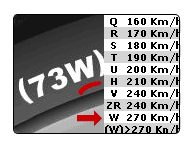
The speed index is a letter code that corresponds to a tire's maximum speed. To determine your speed index, locate the letter on the sidewall of one of your tires and compare it with the speed index table.
|
Speed index |
Speed in km/h |
|
A1 |
5 |
|
A2 |
10 |
|
A3 |
15 |
|
A4 |
20 |
|
A5 |
25 |
|
A6 |
30 |
|
A7 |
35 |
|
A8 |
40 |
|
B |
50 |
|
C |
60 |
|
Speed index |
Speed in km/h |
|
D |
65 |
|
E |
70 |
|
F |
80 |
|
G |
90 |
|
J |
100 |
|
K |
110 |
|
L |
120 |
|
M |
130 |
|
N |
140 |
|
P |
150 |
|
Speed index |
Speed in km/h |
|
Q |
160 |
|
R |
170 |
|
S |
180 |
|
T |
190 |
|
U |
200 |
|
H |
210 |
|
V |
240 |
|
ZR |
>240 |
|
W |
270 |
|
Y |
300 |
- Mounting tires with a lower speed index than that of the original tires or than that recommended by the vehicle's manufacturer is prohibited. However, it is completely acceptable to mount tires with a higher speed index.
- Manufacturers calculate these speed indexes using tires that are in good condition.
- The speed indexes were defined for enclosed speedways. Depending on the different speed indexes, tires warm up less and lose shape less and are more efficient at higher speeds. NB: even though the tires you mount have capacities which are well over speed limits, no manufacturer recommends the use of tires at unauthorised speeds.


 Belgique (français)
 Canada (english)
 Deutschland
 España
 France
 Ireland
 Italia
 Luxembourg (français)
 Nederland
 Portugal
 Schweiz (deutsch)
 United Kingdom
 Österreich


